Finding the right manufacturing partner can make or break your gardening tools business.
If you’re a retailer looking to launch a private label product line or a wholesaler expanding your product range, choosing the right OEM/ODM partner is a critical stage of the process.
Choosing the wrong partner could lead to delays in shipments, low-quality products, and can even frustrate your customers.
The right choice means a reliable partner who can help you build a profitable, sustainable business.
This guide helps you choose an OEM/ODM partner you can rely on for the long term. Let’s dive in.
Understanding OEM vs. ODM: What’s the Difference?
Before we dive into the selection criteria, let’s clarify what OEM and ODM mean in B2B.
OEM (Original Equipment Manufacturer): Think of this partnership as “You build what I design”. In OEM, you’re the one who provides the design, specifications, and sometimes even the molds. The manufacturer produces according to your exact requirements
ODM (Original Design Manufacturer): Think of this one as “I’ll choose from what you’ve already designed”. The manufacturer has existing designs and products; they let you select from their catalogue and customize elements like colors, packaging, and branding
Some garden tool partnerships fall somewhere in between; you might start with an ODM approach, then gradually move toward more customized OEM solutions as your business grows.
10 Critical Factors When Choosing Your OEM/ODM Partner
1. Manufacturing Specialization
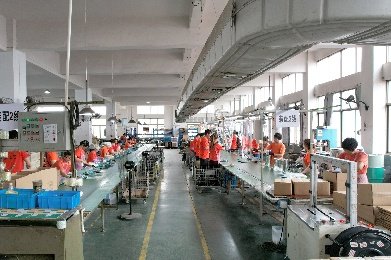
Not all manufacturers have the same specialities; some excel at plastic injection molding, whereas others might struggle with forged steel tools.
Ask yourself:
- Does this partner specialize in the specific garden tools you need?
- Do they understand the materials you want to work with (carbon steel, stainless steel, aluminum, bamboo)?
- Have they produced similar products for other clients?
Working with a specialized manufacturer brings invaluable expertise; they’ll suggest design improvements, warn you about potential issues, and even help you avoid mistakes that could prove costly.
So you may want to avoid generic factories that might say yes to everything but lack the deep knowledge to deliver quality.
2. Production Capacity and Scalability
Your business won’t stay at the same level forever; if you want consistent growth without hurdles, pick a partner who can grow with you seamlessly.
Key questions to ask:
- What’s their current production capacity?
- Can they handle your initial order volume comfortably (without stretching resources)?
- What’s their maximum capacity if your business scales 3x or 5x?
- Do they have backup production lines during peak seasons?
The goal is to make sure your partner has enough capacity to offer what you need in the long run without compromising on quality and branding.
3. Quality Control Systems

When it comes to quality control, the key is to deliver consistently. You don’t want a partner who delivers high-quality products initially but struggles to maintain consistency.
Evaluate their QC process:
- Do they have documented quality control procedures?
- What certifications do they hold (ISO 9001, CE, BSCI)?
- Can you conduct third-party inspections?
- What’s their defect rate, and how do they handle returns?
- Do they perform material testing, durability testing, and function testing?
You can ask for their QC flowchart; a professional manufacturer will gladly share their inspection stages:
- Incoming material inspection
- In-line production checks
- Final pre-shipment inspection
4. Communication and Responsiveness
Imagine trying to build a long-term business partnership with someone who takes three days to answer simple questions.
You want a partner who’s proactive and easy to access.
Here are the Red flags to avoid:
- Vague or evasive answers to specific questions
- Responses that don’t address your actual concerns
- Reluctance to schedule video calls or factory tours
- Delayed response and poor overall communication
They should respond within 24 hours, provide detailed answers, and proactively update you on order progress.
Read More: Gardening Trends in 2026 and Beyond (What You Should Know)
5. Minimum Order Quantities (MOQ)
Minimum order quantity is an important consideration in B2B gardening, especially if you’re testing the market.
Every manufacturer has its own MOQ. For instance, Bell Tower lets you buy as low as 100 units per order.
Some of them are flexible, especially if you’re offering multiple products from them. Others might have a rigid MOQ due to production setup costs.
Be specific and honest about your volume expectations; a good OEM/ODM partner will work with you to find solutions.
6. Pricing Transparency
The lowest quote isn’t always the best deal, especially in the B2B gardening industry.
Look beyond the unit price:
- Are mold fees and tooling costs clearly stated?
- What about sampling costs?
- Are there hidden charges (inspection fees, packaging upgrades, special material surcharges)?
- How do prices change with volume increases?
You want to request a detailed cost breakdown before moving forward. And if you think a supplier is significantly cheaper than its competitors, dig deeper. They may be cutting corners on materials, such as using low-grade steel or neglecting quality control.
7. Lead Times and Reliability
When it comes to retail, time is money. Production delays can lead to frustrated and unhappy customers, especially in the spring season.
Understand their timelines. Ask about their on-time delivery rate. For instance, a manufacturer that ships 95% of orders on time is vastly better than one with a 70% on-time rate.
8. Branding and Intellectual Property Protection

If you’re customizing your order, here’s what you should consider:
- Non-Disclosure Agreements (NDAs) before sharing designs
- Clear contracts
- Design patents or utility patents (when applicable)
- Exclusive production agreements if needed
Reputable manufacturers respect IP rights and will gladly sign NDAs; If a supplier hesitates or dismisses your concerns, consider it a major red flag.
9. After-Sales Support and Warranty
Your relationship doesn’t end when the container ships; after-sales support is an important aspect in B2B bulk buying.
Evaluate post-production support:
- What warranty terms do they offer?
- How do they handle defective products?
- Do they offer technical documentation or assembly instructions?
- What happens if there’s a quality issue?
You want to partner up with someone who stands behind their products. A great partner will work with you to resolve any issues quickly.
Making Your Final Decision

Once you’ve narrowed down your options, here’s how to make the final call:
- Order samples from your top 3 candidates
- Compare quality, packaging, and attention to detail side by side
- Conduct video factory tours if you can’t visit in person
- Start with a small trial order before committing to large volumes
- Evaluate communication throughout the sampling and negotiation process
- Check references from their current clients
- Review contracts carefully with legal support if needed
Let’s Grow Together
When choosing the right OEM/ODM partner, take your time; it’s a process that decides how smoothly you run your operations in the future.
Ask tough questions right from the start, and don’t compromise on the factors that matter most ot your business.
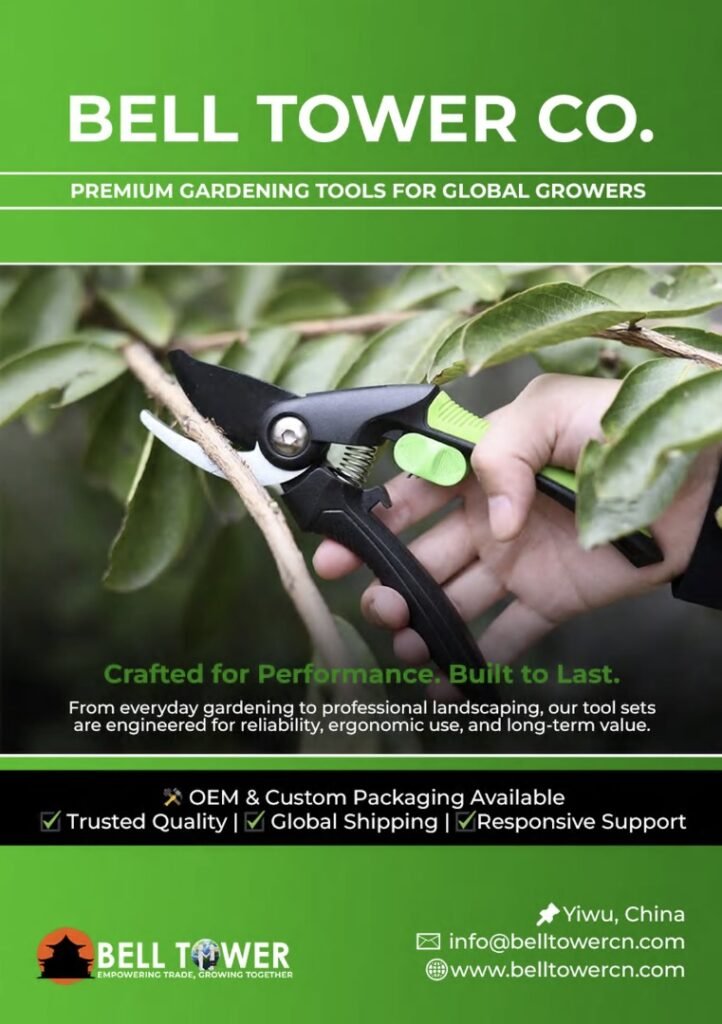
If you’re ready to partner with the perfect garden tools supplier, Bell Tower is here to help. Our team brings over a decade of experience in garden tool manufacturing and international B2B partnerships.
We understand your challenges. That’s why we’ve built our business differently:
- Direct factory relationships with vetted, specialized garden tool manufacturers
- English-speaking support throughout your entire order process
- Flexible MOQs starting from as low as 100-300 pieces for many products
- Transparent pricing with no hidden fees or surprises
- Quality guarantees backed by multiple inspection stages
- Fast communication with responses typically within 12-24 hours
- One-stop solution from design consultation to delivery
Get started today: Request our product catalog.
Or, discuss your customization needs.