If you’re expanding a garden-tool product line, sooner or later you’ll face the big sourcing question: OEM vs. ODM. Both involve manufacturers producing your tools, but the way each model shapes your costs, differentiation, margins, and long-term strategy is very different.
Here’s the thing: The best option is the one that matches where your business is right now, and where you want it to go.
Let’s break down both sourcing models so that you can go with the right one for your short-term and long-term needs.
What OEM Really Means for Garden Tools
OEM (Original Equipment Manufacturer) is what people choose when they want something engineered for a specific customer experience.
Instead of picking a product from a factory catalogue, you’re essentially shaping the design from the ground up in OEM, or at least modifying it heavily.
For garden tools, OEM is especially useful when you’re focused on:
- Ergonomics
- Weight balance
- Specialized steel grades
- Coatings that improve durability
- Unique handle designs
- Brand-specific aesthetic touches
The manufacturer helps develop the product after you give them the drawings, technical files, or at least a clear concept. OEM is how you build a product line that stands out on a crowded shelf.
And What About ODM?

ODM (Original Design Manufacturer) flips the approach; instead of dictating the design, you start with what the factory already makes.
You can request small changes, including the colors, surface treatments, and packaging, but the design and structure are from the factory or partner.
Many factories have dozens or even hundreds of ready-to-order items in categories like pruning shears, trowels, loppers, hose accessories, and spray nozzles.
ODM lets you pick the exact category you want and get it to market quickly. It’s about getting a product that performs, looks brandable, and can keep your inventory costs predictable.
For lower-priced product lines, ODM is often a more natural choice, while OEM is ideal for flagship SKUs. This mix is often more strategic than going with a single model.
Key Differences That Actually Matter
Here’s what actually moves the needle when it comes to garden tool manufacturing:
Product Ownership: OEM gives you ownership of the unique features in a product. ODM is shared; anyone can buy that same tool unless you negotiate exclusivity
Development Time: OEM can take weeks or even months, depending on complexity, while ODM can be ready in days
Cost Structure: OEM requires a higher upfront investment (Tooling, engineering), while ODM has lower upfront costs
Quality Control: With ODM, you verify what already exists, whereas with OEM, you’re defining the quality specs.
Branding Potential: With OEM, you can integrate branding into the product itself (Molded logos, custom handles, etc.). ODM relies more on packaging and subtle changes.
When OEM Is the Better Choice
There are some clear situations where OEM gives you an advantage.
Quality Consistency Matters More than Speed: OEM lets you build exactly what you need for your customers. You won’t have to worry about inconsistent quality.
You’re Developing Innovations: New locking mechanisms. Lightweight yet stronger stainless blends. Custom blade grinds. OEM is your playground.
You’re scaling long term: Once tooling is paid for, your per-unit cost may actually drop below ODM.
Your Brand Identity Lives in the Product: If your handles, materials, and silhouettes define the brand, OEM is basically mandatory.
When ODM Is the Smarter Play
You don’t have to build everything from scratch, of course; sometimes, speed and price win.
You Want to Test the Category: If this is your first venture into garden tools, ODM lets you learn without burning through development budgets.
You Need Something Ready Next Month: Garden season waits for no one, especially if you’re targeting big spring retail windows.
You Want to Expand Your Catalog Quickly: Need twenty SKU variants? ODM does that quickly.
The Factory Already Makes Something Excellent: Some factories have catalog items that outperform custom designs
Cost Breakdown: What You Actually Pay For
Let’s talk money, because most sourcing decisions come down to the budget.
Typical OEM Costs
- Tooling (molds, dies, jigs)
- Engineering and design
- Prototypes and sampling
- Material customization
- Longer development cycles
- Custom packaging from scratch
Typical ODM Costs
- Lower development fees
- Samples from existing stock
- Higher MOQs if you change materials or structure
- Limited customization unless you invest in partial tooling
Supply Chain and Lead Times
Here are the typical lead times for both models (May vary):
OEM lead times:
- Tooling: 20–45 days
- Sampling: 10–20 days
- Production: 30–45 days
ODM lead times:
- Sampling: 2–7 days
- Production: 30–40 days
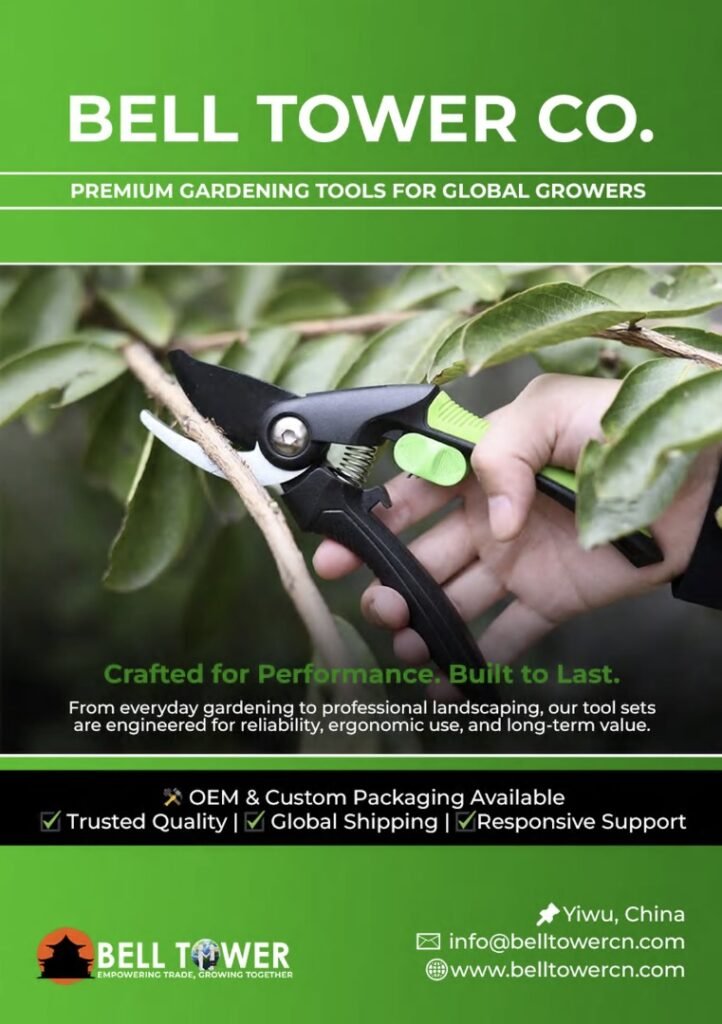
We support bulk orders with flexible MOQs and OEM services. Get in Touch to get a custom offer here.
Questions You Might Have
What If I Want Something Custom but Don’t Want Full OEM Costs?
You can blend both models; start with an ODM product and upgrade key elements like materials, handles, or mechanisms. This keeps the development simple.
Can I Start with ODM and Move to OEM Later?
Yes, in fact, that’s a smart path for most brands. Launch with ODM to validate demand, gather customer feedback, and learn what features matter most. Once you have the clarity, go all in with OEM to build unique products.
Is OEM Automatically Higher Quality?
Not necessarily. Quality depends on the material, coatings, assembly standards, and consistent QC, not whether the project is OEM or ODM. A well-made ODM product can outperform a poorly managed OEM project.
Can I Mix OEM and ODM in My Catalog?
Yes, you can use ODM for fast-moving, price-sensitive items and OEM for premium or signature products. The mix of both models helps you manage margins, test new ideas, and build a balanced product line.
Conclusion
When it comes to the OEM vs. ODM question, there’s no universal answer. It all comes down to where your business is right now.
If you want something unique, ownable, and built for long-term brand identity, OEM gives you more control right off the bat. If your priority is low risk, speed, and fast category expansion, ODM fits you better.
Start with what your budget and timeline allow, refine your product strategy as you go, and don’t hesitate to evolve the model as your market grows.