Walk through any agricultural market, and you’ll spot brush cutters prominently displayed. Walk into a landscaping depot, and you’ll see the same.
Brush cutters cross markets, climates, and buyer types better than most other pieces of outdoor power equipment.
The global brush cutter market was valued at $4.95 billion in 2025 and is projected to reach $7.26 billion by 2035, growing at a CAGR of 3.91%.
What does that tell you? It means if you’re sourcing garden or agricultural tools at wholesale, brush cutters deserve a clear place in your catalog.
What Is a Brush Cutter?
A brush cutter is a handheld power tool with a rotating cutting head. You hold a long shaft and guide the cutting head along the ground or through vegetation.
Brush cutters handle dense grass, thick weeds, small shrubs, and light undergrowth that a standard lawn mower can’t reach.
They use different cutting attachments depending on the job. A nylon line works for grass and soft weeds. A metal blade can handle thick stems and woody material. You can even switch between attachments on the same machine, which makes it more versatile.
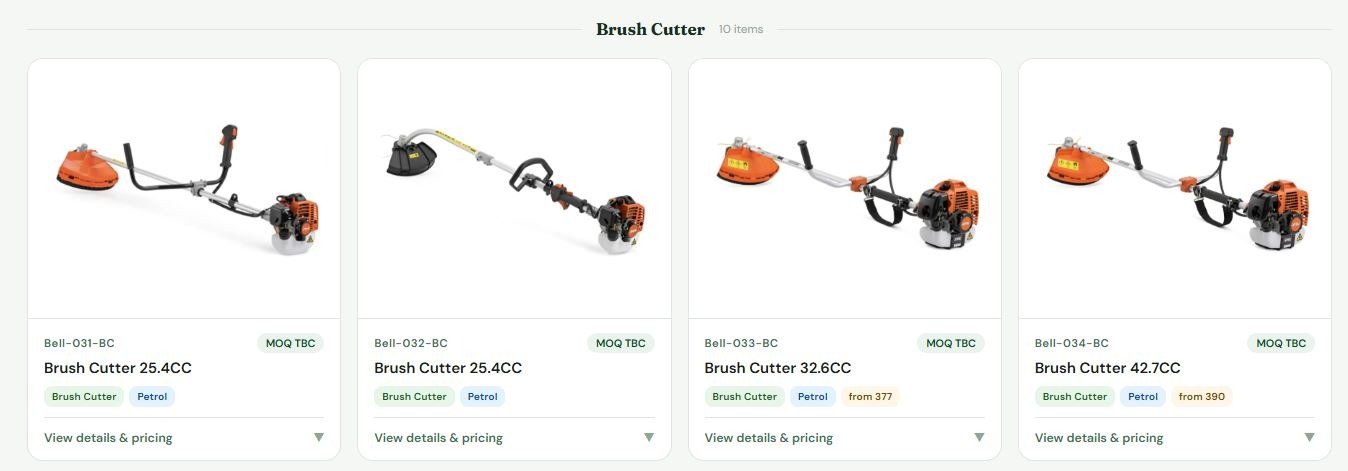
Bell Tower Co. stocks a full range of gasoline brush cutters across multiple engine sizes. Check our catalog here.
Who Uses Brush Cutters?
Understanding the end user helps you position the product for your retail buyers. Here are some prominent end users:
Farmers and Agricultural Workers: They clear field edges, irrigation channels, and crop borders. They also use brush cutters to prepare land between growing seasons.
Landscapers and Grounds Maintenance Crews: They use brush cutters on uneven terrain, steep slopes, and tight spaces where ride-on mowers generally can’t operate effectively. Parks, roadsides, golf courses, and large estates have regular demand.
Homeowners with Large Properties: They buy brush cutters for boundary maintenance, ditch cleaning, and managing overgrown corners; stuff that garden mowers can’t handle.
Main Use Cases at a Glance
Here is a quick breakdown of the most common brush cutter applications your buyers will encounter:
- Clearing overgrown fields, paddocks, and farm boundaries
- Managing grass and weeds along fences, walls, and hedgerows
- Cutting steep slopes and uneven terrain where mowers cannot operate
- Clearing irrigation channels and drainage ditches
- Preparing land for planting or construction
- Roadside maintenance for municipal teams
Key Specs to Know Before You Order
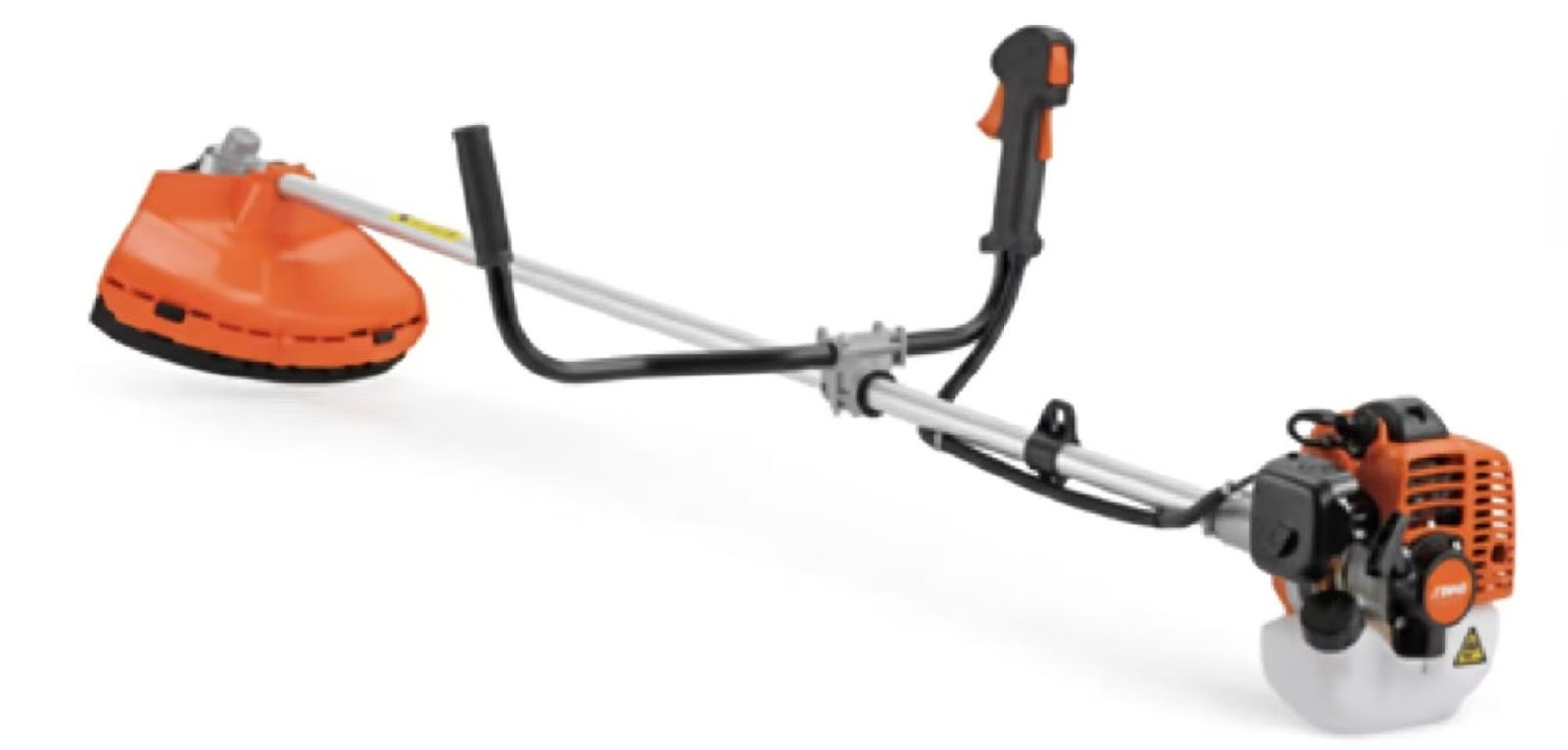
These are the specifications a buyer can ask about. Understand them before you talk to a supplier.
Engine Size (CC)
This is the most important spec because it determines the cutting power and the type of vegetation the cutter can handle.
Let’s discuss some common engine sizes.
- 25.4CC: Entry-level professional performance. Handles grass, weeds, and light shrub growth.
- 32.6CC: A step up in power. Handles thicker stems, denser grass, and more demanding terrain.
- 42.7CC: A heavier-duty range. Handles thick woody shrubs, overgrown land, and extended heavy-duty use.
Engine Type
Gasoline brush cutters typically use a 2-stroke engine. These run on a petrol-and-oil mix. They’re lighter than 4-stroke engines and simpler to maintain in the field.
Cutting Attachment Type
The cutting head determines what type of work the brush cutter can handle. Nylon line suits grass and soft weeks, for instance. A buyer might ask for machines compatible with both attachment types, so it can be a strong selling point.
Harness and Ergonomics
Operators often carry brush cutters for hours in one go. A well-designed shoulder harness reduces fatigue and improves control. Single shoulder harnesses suit light models and shorter tasks.
Double shoulder harnesses distribute weight more evenly; they suit heavier models and long work sessions. When you’re ordering the tool, ask your supplier about the harness design, especially for heavy engines.
Questions You Might Have
What is the Difference Between a Brush Cutter and a Grass Trimmer?
A grass trimmer handles light grass and soft weeds with a nylon line. A brush cutter handles dense grass, thick stems, shrubs, and woody growth. Brush cutters have more powerful engines and stronger builds for demanding work.
What Engine Size is Best for Wholesale Buyers Targeting Agricultural Markets?
32.6CC to 42.7CC will likely cover the majority of professional farm and commercial use cases. Smaller 25.4CC models are more suitable for light commercial buyers. Stocking two or three sizes gives you a complete range to offer customers.
Are Gasoline Brush Cutters Still in Demand With the Shift Toward Battery-Powered Tools?
Yes, gasoline brush cutters are still the preferred choice for many professional agricultural and commercial use cases. Battery tools are growing in regulated urban markets, but gasoline holds firm where runtime, power, and independence from a power source matter more.
What Cutting Attachments Should a Wholesale Brush Cutter Support?
Some machines offer both nylon line and metal blade attachments. Nylon line suits grass and soft vegetation, while metal blades handle thick stems better. You might want to look for models that offer both; versatility is a great selling point.
Can I Order Brush Cutters with OEM or Private Label Packaging from Bell Tower Co.?
Yes, Bell Tower Co. offers OEM and private label options, including custom box artwork, branding, and log placement. This is perfect for distributors who want to build their own branded range on top of factory-direct supply from China.
Conclusion
Brush cutters are a reliable, high-demand product across agricultural, commercial, and residential markets.
They solve a problem that never goes away: Dense vegetation that standard lawn mowers can’t handle effectively.
For wholesale buyers serving farmers, landscapers, or agricultural distributors, brush cutters are essential for the catalog.
But, before ordering, understand the engine sizes, know your markets, and stock a range that covers light and heavy-duty usage.
Do all that, and brush cutters might be one of your most consistent-selling categories.
Read More: Mist Dusters for Agriculture (A Guide for Wholesale Buyers)