Garden center owners and hardware retailers face an important decision that directly impacts their bottom line: Should they stock branded wholesale products or invest in private-label garden tools with their own branding?
The answer boils down to strategy because, in the long run, it impacts your profit margins, customer loyalty, inventory management, and positioning.
So, whether you’re a garden center owner, a hardware store chain, or an e-commerce supply shop, understanding the financial implications of both is important.
This post will give you a comprehensive margin comparison, breaking down the numbers behind private label versus wholesale garden tools.
Understanding the Two Models
Let’s first clarify what each model actually means for garden tool suppliers, buyers, and retailers.
Wholesale Garden Tools involves purchasing products from established brand names at wholesale prices. You then resell them at retail prices. You’re buying products that already have market recognition, established reputations, and existing customer demand.
Private Label Garden Tools involves working with manufacturers or partners to create products that you’ll sell exclusively under your brand’s name. You control your branding, packaging design, and product specifications. So, rather than selling someone else’s brand, you’re building your own identity through custom branding and OEM services.
The fundamental difference affects everything from pricing flexibility to customer perception, but margin impact remains the most immediate concern for most retailers.
Margin Analysis: Breaking Down the Numbers
Understanding true profitability requires looking beyond simple markup percentages. Let’s study realistic margins for both approaches.
Standard Wholesale Margins: Traditional wholesale garden tools typically offer retailers 35-45% gross margins. If you purchase pruning shears at $8 wholesale and sell them at $14.99 retail, you’re working with a ~46% margin before operating expenses.
Private Label Margins: Private label products typically deliver 55-70% gross margins. The same quality pruning shears might cost $6.50 to manufacture and private label, allowing you to retail at $14.99 with a ~56% margin.
Hidden Costs That Impact True Profitability
Gross margin percentages don’t tell the complete story; several factors impact the actual take-home profit from both models.
Wholesale Hidden Costs: Branded wholesale products tend to require less marketing investment. However, you might face inventory carrying costs for slow-moving SKUs.
Private Label Hidden Costs: Initial investment runs higher due to minimum order quantities, custom packaging development, and potential product photography. Quality control responsibility falls entirely on you.
Volume Requirements and Initial Investment
Minimum order quantities represent one of the biggest barriers preventing smaller retailers from accessing private label advantages.
Wholesale Volume Flexibility: Many wholesale distributors allow retailers to order small case quantities. This enables garden centers to test new products with minimal financial risk and adjust quickly to seasonal demand fluctuations.
Private Label Volume Requirements: Private label manufacturing typically requires a large number of MOQs (Could be more than 1000 units). However, modern flexible MOQ suppliers now offer private label options with much lower MOQs.
Customer Perception and Brand Loyalty
Margins matter, but sustainable profitability requires understanding how each approach affects customer behavior.
Wholesale Brand Recognition: When a brand is established, it builds instant credibility. There’s less friction in conversion. However, pricing comparison becomes easier when customers can find identical products at competing retailers.
Private Label Brand Building: Protects your margins as you can’t compare the pricing of store-branded products elsewhere, which eliminates direct competition.
Hybrid Strategy: Combining Both Approaches
You don’t have to choose to be profitable in this business. Strategic combinations can maximize profitability while managing risk:
- Premium Wholesale + Value Private Label: You can stock recognized brands for customers who demand specific names, and offer private label alternatives at 15 – 20% lower prices for value-conscious shoppers
- Private Label Hero Products + Wholesale Fill-in: Develop private label versions of your highest-volume products where margin improvement delivers maximum impact, while stocking wholesale brands for specialty items
Shipping and Logistics Considerations
Wholesale Distribution: Domestic wholesalers handle logistics, delivering products to your door with minimal hassle. You pay for this convenience through their markup.
Private Label Direct Import: Importing private label products directly delivers maximum margin advantages but requires understanding international logistics. Learning the difference between FOB and FCA shipping terms prevents costly surprises. Choosing between FCL and LCL shipping methods based on your order volume optimizes freight costs.
Questions You Might Have
How Much Higher Are Private Label Margins Really?
Private label margins typically run 10-25 percentage points higher than wholesale. For instance, a wholesale pruner with 45% margin could become 60% margin under private label.
What Minimum Order Quantity Do I Need for Private Label?
Modern suppliers typically offer private label starting at 300-500 units total across multiple SKUs. You could order 150 pruners, 150 trowels, and 200 shears to reach minimums while building a complete private label line.
How Long Does Private Label Product Development Take?
From initial design to receiving shipment, expect 90-120 days for your first private label order. Subsequent reorders typically run 30-45 days since packaging and specifications are already finalized. Plan accordingly for seasonal inventory needs.
Can I Mix Private Label and Wholesale in the Same Store?
Absolutely. You can use a hybrid strategy, offering private label for high-volume basics while stocking wholesale premium brands for customers seeking specific names.
Making the Right Choice for Your Retail Business
Choosing between private-label and wholesale garden tools can be a tricky decision. But when you understand the differences, you can pick the right option easily.
You can also strategically combine both approaches based on product categories, customer segments, and competitive positioning.
Private-label tends to deliver superior margins and builds brand loyalty, but it requires a larger upfront investment. Wholesale provides proven products and minimal risk, but it compresses your margins.
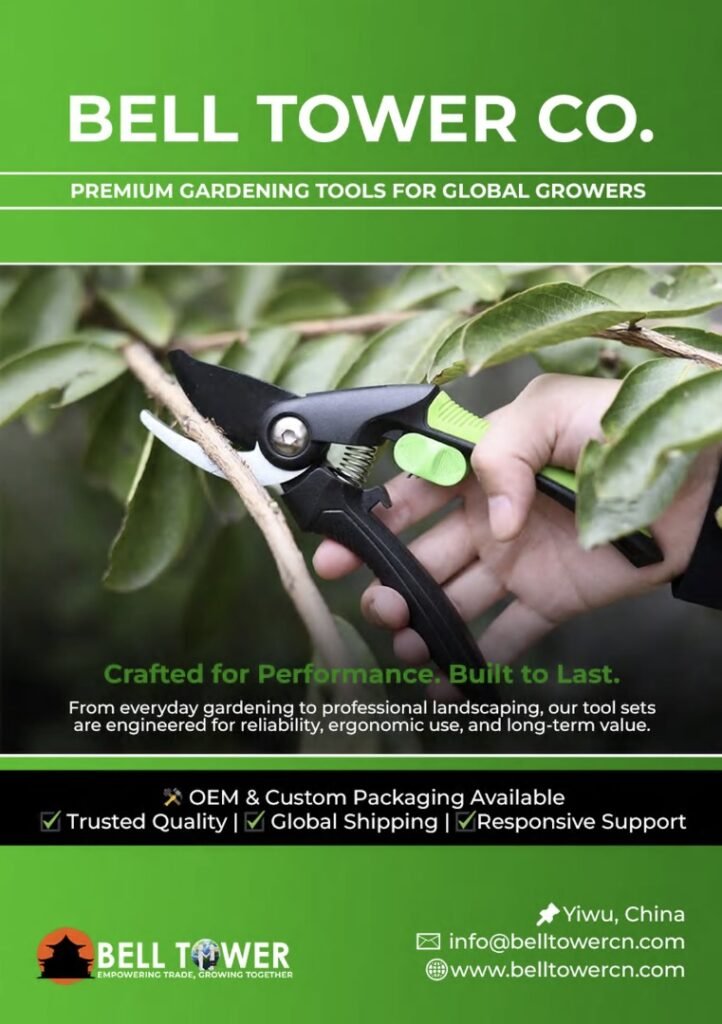
We specialize in helping garden retailers stock high-quality tools and resell them at attractive rates. Bell Tower Co. offers flexible MOQs starting at just 100 units, full OEM customization services, and comprehensive support from product selection through delivery.
Download our complete product catalog to explore private label possibilities for your store.