Look at any gardening tools catalog of a wholesaler, and you’ll almost always find the same items: Pruning shears, trowels, and gloves.
According to Verified Market Reports, the long-handled garden tools market was valued at $1.5 billion in 2025 and is projected to reach $2.1 billion by 2034, growing at a CAGR of 4.5%.
Shovels, forks, rakes, hoes, and weeders all sit within this segment. And that is steady, predictable demand from a buyer base that needs these tools year after year.
These tools get replaced regularly and serve users across residential, agricultural, and professional landscaping markets. They don’t need a lot of selling either.
In this guide, we cover the main types of long-handled gardening tools you should stock. You’ll also learn about the specs that matter, handle materials, and what to know before placing a wholesale order.
Forks, Spades, and Shovels: What Is the Difference?
These tools are easy to confuse with each other. Understand each one to position them correctly when speaking to your retail buyers.
Garden Forks
A garden fork has four thick tines. The design lets you push into compacted or stony soil more easily than a solid blade. You can use it to loosen and aerate soil, break up clods, and turn compost.
Since the tines don’t have a solid surface, they tend to move less earth per stroke and cause less damage to soil structure.
Garden forks typically have four rectangular tines. Pitchforks have thinner and longer tines; they’re designed for moving loose material like hay.
Garden Spades
A spade has a flat, straight-edged rectangular blade. It’s good for precise digging tasks like cutting sod, edging beds, transplanting plants, and creating planting holes.
Typically, a standard spade has a shorter handle with a D-grip at the top. The grip gives you better leverage on push-down tasks. The tool isn’t great for scooping and moving loose material, though. Shovels excel in this department.
Shovels
Shovels help with digging and transferring material. A round-point shovel has a curved, pointed blade that cuts into soil and scoops it up.
A square-point shovel has a flat blade better suited for moving loose material, such as gravel, sand, or mulch.
Their handles are generally longer than spade handles, which gives you more leverage for deep digging. Some of them come with a D-grip handle, and some with a straight, long handle.
Quick Comparison (Just to Give You an Idea): Fork vs Spade vs Shovel
| Feature | Garden Fork | Spade | Shovel |
| Blade/Head | 4 tines, open | Flat, rectangular blade | Curved or flat blade |
| Primary use | Aerating, loosening soil | Edging, transplanting, cutting | Digging, scooping, and moving material |
| Handle style (Approx) | D-grip, 40 to 48 in | D-grip, 28 to 40 in | D-grip or straight, 40 to 48 in |
| Best material | Forged carbon steel tines | Carbon or stainless steel blade | Carbon or stainless steel blade |
| End user | Gardeners, farmers | Gardeners, landscapers | Gardeners, landscapers, farmers |
Handle Materials: Wood, Fiberglass, or Steel?
Handle material is one of the most important questions a buyer can ask. Each option has trade-offs worth knowing.
Wood Handles: It offers a comfortable grip and is relatively lightweight and affordable. The drawback is that wood can crack, rot, and warp if stored outdoors or placed in wet conditions.
Fiberglass Handles: They’re stronger than wood by weight, and won’t easily crack, warp, or absorb moisture. The tradeoff is a higher cost. Plus, they might not be as comfortable as wood handles.
Steel Handles: They’re the heaviest option, which can be an advantage when driving the tool into hard soil, but they can add fatigue during long work sessions.
Who Buys Long-Handle Garden Tools?
The market for long-handled tools like forks, spades, and shovels is wide. Understand the end user to stock the right products for your retail buyers.
- Home gardeners who dig planting beds, edge lawns, and turn compost
- Landscaping contractors who use long-handle tools regularly on residential and commercial projects
- Farmers and agricultural workers who use forks and spades for soil preparation, planting, and drainage work
- Nurseries and garden centers
- Construction and infrastructure contractors
- And maybe more
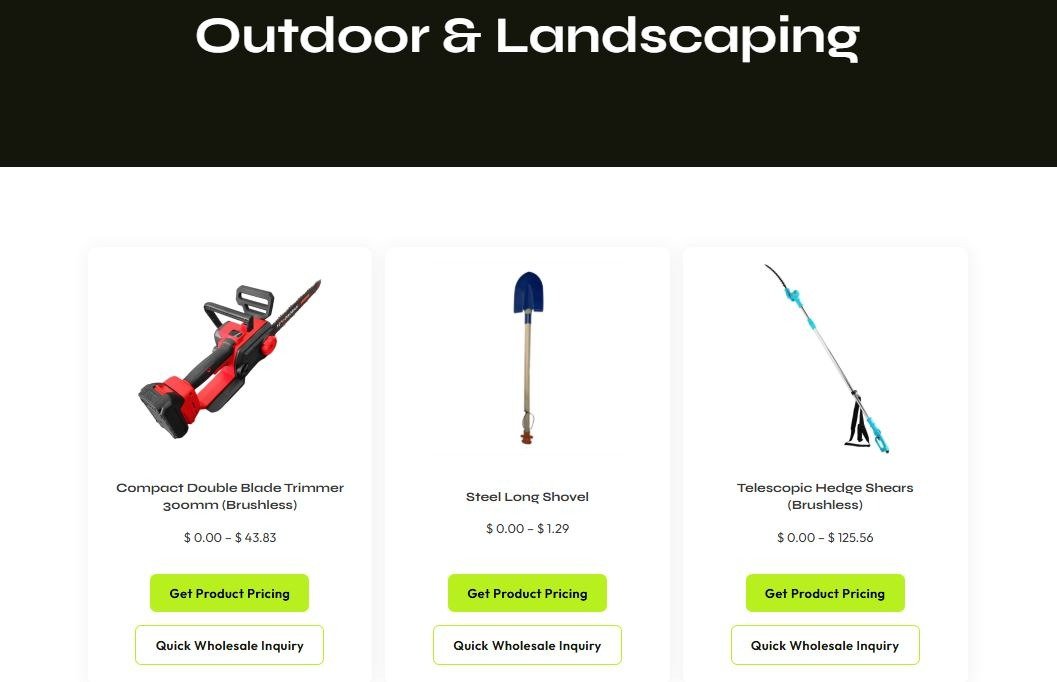
Bell Tower Co. stocks a range of long-handle garden tools. Browse our outdoor landscaping range here.
What to Confirm Before Placing a Wholesale Order
Here are some key points to go through with your supplier before ordering in bulk quantities:
- Head Material: Carbon or stainless steel
- Handle Material: Wood, fiberglass, or steel
- Handle length and Grip: D-grip and/or straight
- Weight: Especially for long-handle tools that people might use for long periods
- Rust Protection: Surface coatings on carbon steel heads
- Packaging: Individual or bulk cartons. OEM and private label options
Check out our import and expert services page to learn how Bell Tower Co. manages bulk orders.
Questions You Might Have
What is the difference between a spade and a shovel?
A spade has a flat, straight-edged blade suited for precise cutting tasks like edging beds, transplanting, and cutting sod. A shovel has a curved or pointed blade for scooping and moving loose material.
Should I stock wood or fiberglass handle tools for wholesale?
Both are good depending on your target market. Wood handles are affordable, comfortable, and suitable for general retail buyers. Fiberglass handles are more durable, weather-resistant, and are more suitable for professional and agricultural buyers.
What handle length is standard for long handle garden tools?
Shovel and pitchfork handles can range from 40 to 48 inches. D-grip spades tend to have shorter handles. Confirm the exact dimensions with your supplier before ordering, as handle length preferences can vary between markets.
Can I order long handle tools with OEM or private label packaging from Bell Tower Co.?
Yes, Bell Tower Co. offers OEM and private label options, including custom packaging and branding. It’s perfect for distributors who want to build their own product range. Contact us to discuss options if you want low MOQs and factory-direct sourcing from China.
Conclusion
Forks, spades, and shovels are dependable gardening tools. People buy them regularly in residential, commercial, and agricultural markets. They sell consistently because they eventually wear out and break. And they appeal to a wide buyer base.
Get the handle material and head spec right, cover both D-grip and straight handle options if possible, and you’ll have a strong range.
If you want to add long-handle garden tools to your wholesale range, get in touch here. Or, check out our product catalog here.