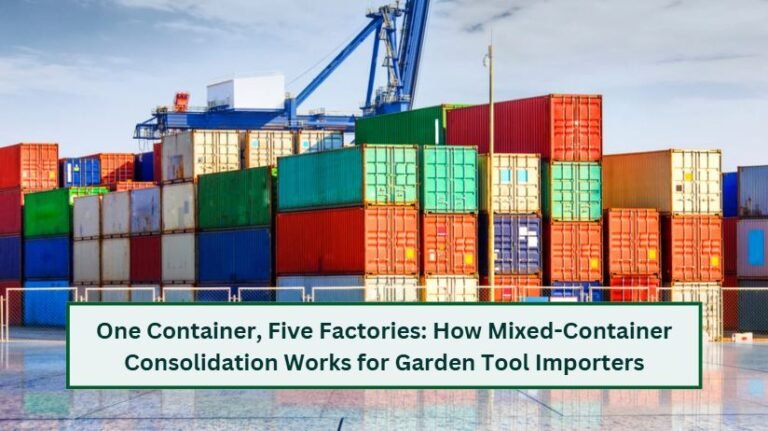
Most shipping guides are written as if every destination were the same — goods leave China, cross the ocean, arrive at a port, clear customs, done. For a buyer in Germany or the Netherlands, that’s broadly true. For a buyer in Serbia, Bosnia or the wider Balkans, it isn’t, and the differences are exactly where importers lose time and money if nobody warns them.
Serbia is landlocked. Bosnia has almost no coast. So “which port” is a real decision with several answers, and the right one depends on where your warehouse is and how you want the goods to travel the last stretch. Here’s how the routes actually work.
The Adriatic gateways: Koper and Rijeka
For Serbia and the western Balkans, the two most common entry points are Koper in Slovenia and Rijeka in Croatia. Containers arrive there from China by sea, then move inland to Serbia by road or rail. They’re well-connected, handle this traffic constantly, and for much of the region they’re the default.
The detail to understand: both Slovenia and Croatia are in the EU, while Serbia and Bosnia are not. That means a container destined for Serbia but landing at an EU port doesn’t clear final customs there — it moves onward under a customs transit procedure and is cleared at the Serbian border instead. This is routine and your forwarder handles it, but it’s why the paperwork and the Certificate of Origin matter at the Serbian border, not at the port of arrival. A buyer who doesn’t grasp this expects to clear at Koper and is confused when clearance happens later.
Constanța and the Black Sea route
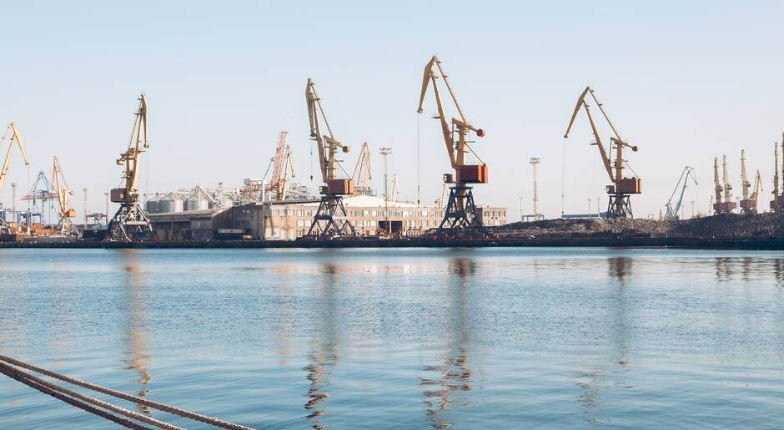
Constanța in Romania, on the Black Sea, is the alternative gateway, particularly useful for eastern parts of the region and for routing onward up the Danube. Romania is also in the EU, so the same transit logic applies for non-EU destinations, but for some buyers the road and rail connections from Constanța are the better fit than the Adriatic side.
The Danube and the Belgrade river port
Here’s the option few buyers consider: the Danube. Belgrade has a river port, and goods arriving at a sea port (Constanța, or via the North European ports) can travel inland by river barge along the Danube. For heavy, non-urgent cargo this can be economical, since barge transport is cheap per tonne. It’s slower and weather-dependent, so it suits planned, bulk shipments rather than anything time-sensitive — but for the right cargo it’s a lever worth knowing exists.
Piraeus: the China-backed shortcut
Worth knowing about: Piraeus in Greece has become a major gateway for Chinese goods into southeastern Europe, with rail corridors running north from it into the Balkans and Central Europe. For some routings it shortens the journey compared with sailing all the way around to the Adriatic or North Sea. Whether it beats Koper or Rijeka for your specific destination depends on the inland leg, but it belongs on the list of options a good forwarder will price.
Rail from China — direct to the region’s doorstep
Sea isn’t the only way in. As a Yiwu-based supplier, we sit on the China–Europe rail network, and rail reaches hubs from which the Balkans are accessible in roughly 18–25 days — meaningfully faster than sea. For a buyer who needs stock sooner than an Adriatic sea route allows, rail to a Central European hub and then a short road leg south can be the smarter lane, or a way to split an order so a first batch arrives quickly while the bulk follows by sea.
Why this matters for how you buy
The routing decision isn’t academic — it changes your cost, your transit time, and how the last leg is handled. Two practical conclusions:
First, the right port depends on your warehouse, not on a default. A buyer in northern Serbia and a buyer in the south may be best served by different gateways. A supplier or forwarder who asks where your warehouse is before quoting is doing it properly; one who quotes a single port for everyone isn’t.
Second, this is where the shipping term does a lot of work. On DAP — Delivered At Place — the supplier arranges the routing and the inland movement to your door, so all of the above becomes their problem to solve rather than yours. For a buyer who doesn’t want to learn the difference between a Koper transit and a Danube barge, that’s the point of agreeing DAP in the first place. (You still settle import duty and VAT at the Serbian border — and that’s where your Certificate of Origin earns its keep under the China–Serbia free trade agreement.)
The takeaway
Shipping into the Balkans has more routes and one extra wrinkle — the non-EU customs border — than shipping to an EU country. None of it is difficult once it’s laid out, but it does reward a supplier who knows the region rather than one applying a generic playbook. The questions worth asking before you order: which gateway suits my warehouse, who handles the inland leg, and where exactly do my goods clear customs?
Bell Tower ships into Serbia and the wider Balkans regularly, by sea via the Adriatic gateways or by rail from Yiwu, and can deliver DAP to warehouse so the routing is handled end-to-end. Tell us where your warehouse is and we’ll map the options for you.