When a customer asks about bypass loppers vs anvil loppers, they may want to know which one suits a particular job. For retailers and distributors, the answer can also shape what you order and how you describe each product.
This guide explains how each type works, which customers each can suit, and what you can check when sourcing loppers wholesale
How Do Bypass Loppers Work?
Bypass loppers work in a similar way to scissors. A sharpened blade slides past a lower jaw and can slice through a branch caught between them.
Harvest to Table’s lopper buyer’s guide describes bypass loppers as making a close, clean cut and suggests them for live plant tissue. Because the blade passes the jaw, it can be placed close to the point where one branch meets another. This makes bypass loppers a possible match for pruning shrubs, roses, and trees.
How Do Anvil Loppers Work?
Anvil loppers use a single sharpened blade that closes onto a flat surface called the anvil. The action can be compared to a knife pressing onto a cutting board.
This design can flatten and crush the stem. Anvil loppers can be better suited to dead wood. Anvil loppers can also be slightly easier to squeeze. However, the anvil can stop the blade from cutting close to the branch, which can leave a short stub.
Anvil loppers often suit jobs such as clearing dry branches or cutting back dead growth, where the neatness of the cut may matter less.
Bypass vs Anvil Loppers at a Glance
| Feature | Bypass Loppers | Anvil Loppers |
|---|---|---|
| Cutting action | Blade slides past a lower jaw | Blade closes onto a flat anvil |
| Suit | Live branches | Dead or dry wood |
| Cutting close to a branch | Cuts close | Can leave a short stub |
| Effort to squeeze | Standard | Can be slightly easier |
What About Ratchet and Telescopic Loppers?
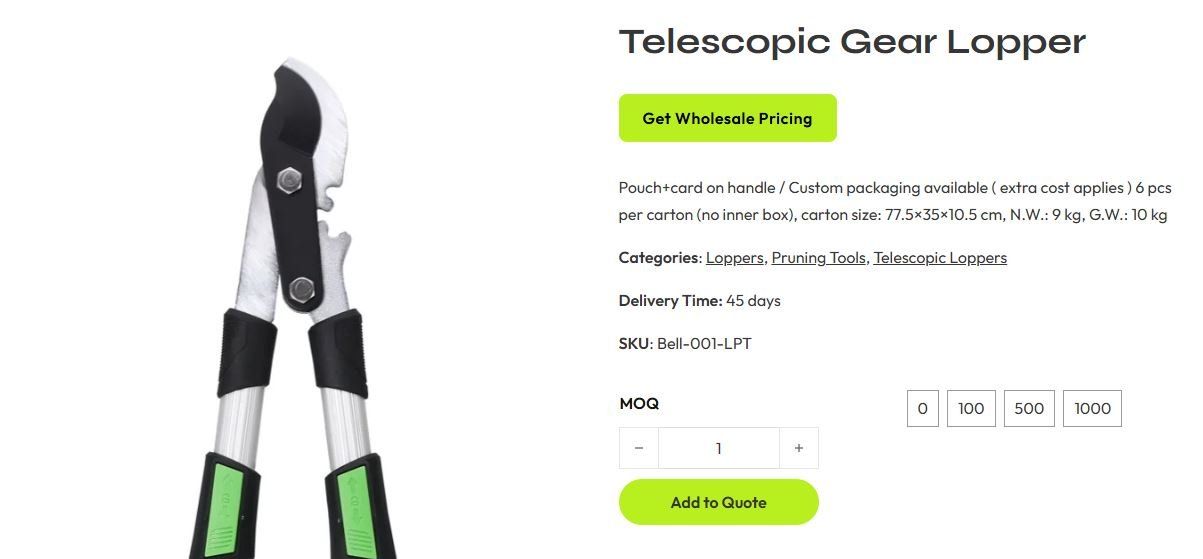
Some loppers include a gear or ratchet mechanism. According to Harvest to Table, ratcheting loppers use gears to increase cutting power and require less strength to operate. Telescopic loppers have extendable handles, which can help users reach higher branches.
Which Type Should You Stock?
Your product mix can depend on who buys from you:
- Home gardeners who prune live shrubs and trees may prefer bypass loppers.
- Landscapers and maintenance teams who clear dead wood can find anvil loppers useful.
- Customers with less grip strength may prefer ratchet or gear-assisted models.
- Customers who prune high branches can benefit from telescopic models.
Stocking both bypass and anvil types can help your staff match the tool to the task. Our guide to wholesale garden tools for landscapers covers other pruning tools for commercial crews.
What to Check When Sourcing Loppers Wholesale
- Blade steel: Our carbon steel vs stainless steel guide explains that carbon steel can hold an edge longer, while stainless steel can resist rust better.
- Handle material: Lighter handles can make overhead work more comfortable.
- Cutting capacity: You can check the maximum branch diameter listed for each model.
- Mechanism: Options can include standard, ratchet, or gear-assisted designs.
Wholesale Loppers from Bell Tower
Bell Tower supplies wholesale loppers from Yiwu, China, including telescopic loppers.
Custom packaging options are also available. To see how ordering and export work, visit our importing and exporting services page. For specs or pricing, you can contact our team for lopper pricing.
Questions You Might Have
Are bypass loppers better than anvil loppers?
Each type suits different jobs. Bypass loppers can suit live branches, while anvil loppers can suit dead or dry wood.
Can anvil loppers cut dead wood?
Yes, anvil loppers can be a good fit for dead or dry wood. The blade presses the branch against a flat anvil, which can give a strong cut through tough material.
Do anvil loppers leave stubs?
They can. The anvil can stop the blade from reaching close to the branch it is cut from, so a short stub may be left. Bypass loppers tend to cut closer.
What is a ratchet lopper?
A ratchet lopper uses a gear or ratchet mechanism to increase cutting force. This can mean less hand strength is needed for each cut.
What should I check before ordering loppers in bulk?
Check the blade steel, handle material, maximum cutting capacity, and mechanism type. Asking your supplier for a spec sheet for each model can help you compare options.
Final Thoughts
Bypass and anvil loppers suit different jobs, so the right mix depends on what your customers cut most. Bypass models can be a good match for live branches, while anvil models can suit dead or dry wood. Ratchet and telescopic options can extend your range for customers who need extra cutting power or reach. If you’re planning a lopper order, you can contact our team to discuss available models, specs, and pricing.